Brazil will report $10,000+ transfers to self-custody wallets: what it means for your privacy
From October 1, crypto providers operating in Brazil must report every transfer of $10,000 or more to or from a self-custody wallet to the country's financial intelligence unit. It's not a ban and not a limit — but it's one more step toward making large crypto movements visible to the state. Here's what changes, what the rule doesn't require, and how to keep your privacy legally.
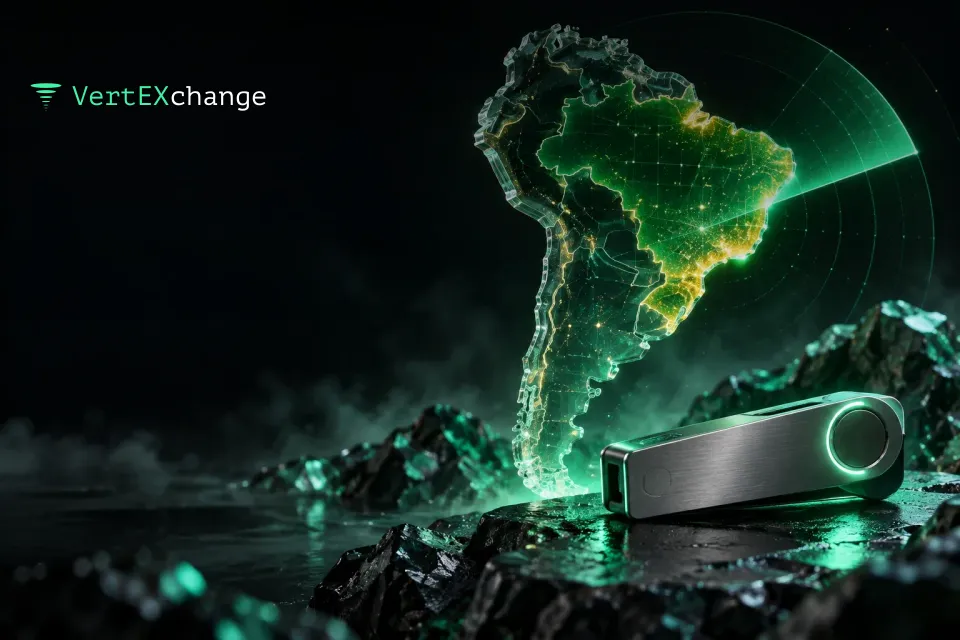
What the central bank decided
On September 23, the Central Bank of Brazil announced new anti-money-laundering and counter-terrorist-financing rules for crypto providers. Resolution BCB No. 588 takes effect on October 1, 2026.
The key point: virtual asset service providers must specifically report to COAF, Brazil's financial intelligence unit, any transfer worth $10,000 or more that moves to or from a self-custody wallet. A self-custody wallet is one where you hold the keys, not an exchange. That is where your coins land when you do a crypto swap and enter your own address instead of keeping funds in an exchange account.
What it means — and what it doesn't
| Is it true that… | Answer |
|---|---|
| Transfers to your own wallet will be banned? | No. You can still hold crypto yourself and move more than $10,000. |
| Wallets will have to be registered? | No. The rule introduces no wallet registration. |
| Wallet owners must file reports themselves? | Not under Resolution 588: individuals get no new obligation to report each transfer. The provider reports. |
| Will the state see large transfers? | Yes. A $10,000+ transfer between a crypto provider and a personal wallet goes into a COAF report. |
Why this isn't only about Brazil
Brazil is one of Latin America's largest crypto markets, and its rule fits a wider trend. Regulators are paying ever closer attention to the line between platforms and self-custody wallets, because that's where crypto leaves exchanges' control. The logic of such rules is always the same: see the large sums leaving or arriving at platforms. Spain's tax agency, for instance, also lists transfers to non-custodial wallets as a risk, even though coins in your own wallet don't go on the Modelo 721 return.
How to keep your privacy legally
Privacy isn't breaking the law — it's hygiene. Rules that work in any country:
- Keep long-term savings in your own wallet. You hold the keys, so access to your funds doesn't depend on anyone else's decisions.
- Share only the data that's actually needed. The fewer services know your email, phone and documents, the fewer leaks can touch you.
- Choose services without accounts. An exchange doesn't need to know more about you than a receiving address. To exchange USDT TRC20 to Bitcoin, say, your wallet address is enough.
- Pay taxes by your country's rules. Privacy doesn't contradict that.
Swapping without extra data
VertEXchange has no accounts: no sign-up, no email, no phone. You enter your own wallet address, send your coins and receive the new ones right at that address, and the exchange details are erased a day after it completes. That's how you can swap BTC to ETH, for example, and you'll see the rate right away.
No sign-up, no email — just your wallet address. We erase exchange details after a day.
Start a swap