Bitcoin address types: bc1, 1 and 3, how they differ and which one to use for a swap
There are four bitcoin address types: the old one starting with 1, the script one starting with 3, SegWit with bc1q and Taproot with bc1p. They all work on the same network and accept the same BTC, and you can send from any of them to any other. For receiving, bc1q is the sensible choice today: every service understands it, and the fee when you send the coins on is lower. Below we cover the differences, compatibility and the mistakes that get coins lost.
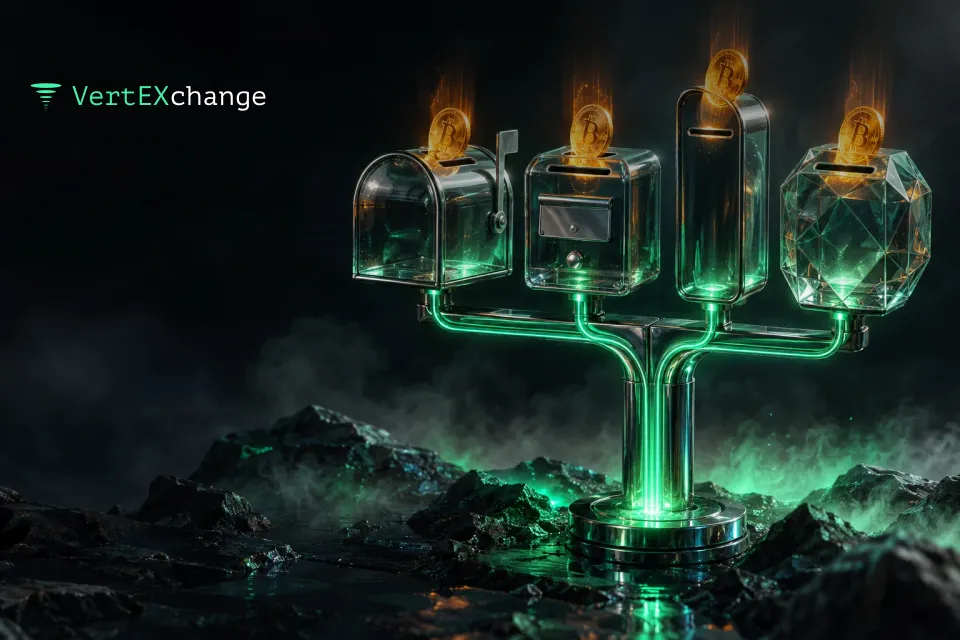
Bitcoin address types: what they are
A bitcoin address is not an account but an encoded condition: who can spend the coins and how. Over 17 years the number of ways to write that condition has grown to four, which is why addresses look different.
| Starts with | Name | Introduced | Length | Letter case |
|---|---|---|---|---|
| 1 | Legacy (P2PKH) | 2009 | 26-35 characters | matters |
| 3 | Script (P2SH) | 2012 | 34 characters | matters |
| bc1q | Native SegWit (bech32) | 2017 | 42 or 62 characters | lowercase only |
| bc1p | Taproot (bech32m) | 2021 | 62 characters | lowercase only |
All four types live on the same Bitcoin network. A coin received at an address starting with 1 is no different from a coin at bc1q: it is the same BTC.
Legacy: addresses starting with 1
The oldest format. Every wallet and every exchange understands it, but transactions from these addresses are the heaviest, and so the most expensive. New wallets create them only on request.
P2SH: addresses starting with 3
Behind the 3 sits a script. Most often it is a multisig, where several keys are needed to spend, or SegWit "wrapped" for compatibility with older services. You cannot tell from the address what exactly is inside. For years many exchanges issued exactly these addresses for deposits.
Native SegWit: bc1q
Today's standard. The signature data is moved to a separate part of the transaction, so it weighs less. The address has no capital letters and no characters that are easy to confuse, and the checksum catches typos more reliably than in the older formats.
Taproot: bc1p
The newest type, activated in November 2021. Complex spending conditions look like an ordinary payment on the blockchain, which adds privacy, and multisig becomes cheaper. Sparrow, Bitcoin Core, Ledger, Trezor and other modern wallets create these addresses.
Which address to choose for receiving
The short answer: bc1q, unless you have a reason to pick another.
- bc1q fits almost every case. All major exchanges and services can send to it, and spending from it is cheaper than from the older types.
- bc1p is worth taking if your wallet offers it by default and the sender supports it. Some older services still answer bc1p with "invalid address".
- 3 comes in handy if the sender cannot handle bc1. That still happens with old ATMs and small platforms.
- 1 is needed today only for compatibility with very old software.
If you are still deciding where to keep your coins, start with how a custodial wallet differs from a non-custodial one: the address type matters less than who holds the keys.
Can you send from one type to another
Yes, in any combination. From bc1q to 1, from 3 to bc1p, from 1 to bc1q: the network is the same, and to it these are ordinary transfers. The only limit can be on the sender's side: their wallet or exchange has to recognize the recipient's format.
What to do if a service does not accept your bc1p or bc1q:
- Open the receive settings in your wallet and choose another address type. The option is usually called "address type" or "format".
- Create an address the service understands, most often 3 or bc1q.
- Receive the coins there. They will land in the same wallet, under the same seed phrase.
You do not need to change wallets for this: modern apps hold addresses of several types at once.
Where the fee is lower
A bitcoin fee depends not on the amount but on the weight of the transaction. The weight is set by the type of address you spend from, meaning yours, not the recipient's.
| Spending from | Weight of one input | Compared with Legacy |
|---|---|---|
| 1 (Legacy) | about 148 vB | - |
| 3 (SegWit inside P2SH) | about 91 vB | roughly 38% less |
| bc1q | about 68 vB | roughly 54% less |
| bc1p | about 58 vB | roughly 61% less |
In practice the difference shows when the network is busy: a transfer from an address starting with 1 can cost twice as much as the same transfer from bc1q. When you are only receiving coins, the sender pays, and the type of your address has little effect on their fee. If a transfer does get stuck because of a low fee, see our breakdown of why a crypto transaction is stuck pending.
Why your wallet shows a new address every time
This is normal. Modern wallets derive all addresses from one seed phrase and offer the next one after each incoming payment. Old addresses keep working, and coins sent to any of them arrive in the same wallet.
A new address for every payment is a matter of privacy: it is harder for outsiders to link your incoming payments to each other. There is a second reason too. Until something is sent from an address, its public key is hidden behind a hash. After the first spend the key is visible on the blockchain forever. This is the basis of researchers' call to prepare a "bunker mode" in case of quantum attacks. Taproot has a quirk here: in a bc1p address the public key is written out from the start, not hidden behind a hash.
Mistakes that cost money
Mixing up the address type itself is harmless, the coins will arrive anyway. Other mistakes are the dangerous ones.
- Wrong network. The BTCB token on BNB Smart Chain or WBTC on Ethereum is not bitcoin, and you cannot send them to a bc1 address. And if you withdraw BTC from an exchange over a "cheap" network to a bitcoin address, the coins may be lost. What to do in that situation is covered in the guide on crypto sent to the wrong network.
- Bitcoin Cash instead of Bitcoin. Old BCH addresses also start with 1 and 3 and look like bitcoin addresses. Check which coin and network you selected on the exchange.
- Address swapping. Clipboard malware replaces the copied address with a similar one. After pasting, compare the first and last 5-6 characters.
- A testnet address. tb1 addresses belong to the testnet, and real BTC is not sent to them.
- Lightning instead of an address. A string that starts with lnbc is a Lightning invoice, not an address. A regular transfer cannot pay it.
- Capital letters in bc1. Bech32 addresses are written in lowercase. If a service turned some of the letters into capitals, copy the address again.
Planning to receive bitcoin in your own wallet through a crypto exchange? Copy the address with the button in your wallet instead of typing it by hand: the checksum protects against a typo, but not against an address from someone else's wallet.
Which address to use when swapping to bitcoin without registration
The VertEXchange form accepts all four mainnet address types: bc1q, bc1p, 3 and 1. It checks not only the format but also the checksum, so an address with a typo will not pass. No account, email or phone number is needed for a swap: you pick a pair, paste the address and see the rate and the amount you will receive before sending.
- A fixed rate holds for about 15 minutes, and the amount will not change while the transfer confirms.
- The coins go straight to your address: VertEXchange does not hold them.
- You can add a refund address: the coins return there if the swap does not go through.
- Personal fields of the operation are deleted 24 hours after completion, and the swap history stays only in your browser.
- A support chat is on every page, and questions are resolved by swap code.
The most common path is to buy bitcoin with USDT TRC20 to a bc1q address from your own wallet. If you hold ether, you can swap ETH to BTC without registration. And if you need bitcoin in exchange for a privacy coin, there is the Monero to bitcoin pair.
FAQ
What is the difference between bc1 and 1 or 3 bitcoin addresses?
They are different generations of the format. bc1 addresses are newer: transactions from them are lighter and cheaper, and typos are caught more reliably. The network and the coin are the same.
Can I send bitcoin from a bc1 address to an address starting with 1 or 3?
Yes. All address types are compatible with each other, and a transfer goes through in any combination.
Which bitcoin address should I use to withdraw from an exchange?
bc1q, if the exchange supports it. Almost every platform accepts it, and spending from it is cheaper.
What is a bc1p address?
A Taproot address, the newest type. It gives complex deals more privacy and the lightest transactions, but not every older service can send to it.
Why does the exchange say my bc1 address is invalid?
Most likely it does not support that format. Create an address of another type in the same wallet, usually 3 or bc1q.
My wallet showed a new address. Does the old one still work?
Yes. All addresses are derived from one seed phrase, and coins sent to the old address arrive in the same wallet.
Does my address type affect the sender's fee?
Hardly. The fee is set first of all by the type of address the coins are spent from.
Is a bitcoin address case sensitive?
Addresses starting with 1 and 3 are: capital and lowercase letters in them are distinct. bc1 addresses are written in lowercase only.
No email, no account: enter your wallet address, send your coins and get the new ones straight to it.
Swap USDT to BTC