Why Is Monero Delisted and Where Can You Get It in 2027
Why is Monero delisted from so many exchanges? The coin itself works fine; the reason is anti-money laundering rules. XMR hides the sender, the receiver and the amount by default, so an exchange struggles to show a regulator where the money came from. Binance, OKX and Kraken in Europe dropped XMR back in 2024, and from July 10, 2027, EU rules will bar crypto service providers from holding accounts with such coins. Meanwhile the Monero network keeps running as usual: you can still get the coin through exchange services, P2P platforms and DEXs straight to your own wallet.
What a delisting means and what it doesn't
A delisting is one exchange's decision to stop trading a coin. The exchange closes the trading pairs, keeps withdrawals open for a while, and then usually converts whatever is left in customer accounts into another coin. Binance, for example, converted remaining XMR balances into USDC.
What a delisting does not mean:
- nobody has banned the coin: the Monero network is running, blocks keep coming and transfers go through;
- the XMR in your own wallet is still there, and the exchange has no access to it;
- owning Monero is still legal in most countries, since the restrictions apply to services rather than people.
Put simply, what the exchange gives up is the compliance risk that comes with screening the coin. You can get XMR without an exchange at all, for example through an instant crypto exchange that sends it straight to your address. More on that below.
Why is Monero delisted by exchanges
The exchange can't see where the money came from
On Bitcoin and Ethereum every transfer is public. An exchange takes the address the coins came from, follows the chain of transfers and checks whether they are linked to a hack, the darknet or a sanctioned address. Blockchain analytics tools are built on exactly this, and almost every large platform uses them today.
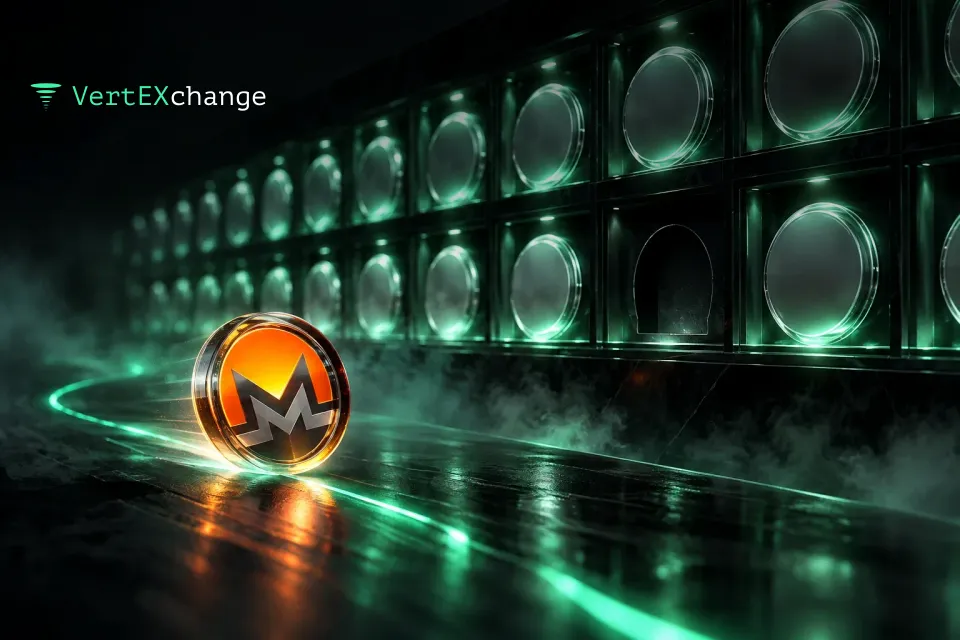
With Monero that doesn't work. Ring signatures hide the sender among other participants, one-time stealth addresses hide the receiver, and RingCT hides the amount. That is why you can't trace Monero transactions on the blockchain the way you trace bitcoin, and the exchange has nothing to show an auditor.
The travel rule
The international FATF requires crypto service providers to pass sender and receiver details to each other when they move funds. This is the so-called travel rule. With a coin whose blockchain shows neither the sender nor the receiver, complying is harder, and regulators hold the exchange to an even higher standard.
Banks and licenses
A large exchange needs banks willing to hold its accounts and licenses in dozens of countries. A single privacy coin on its list can cost it an awkward conversation with a bank or a regulator. For many platforms it is easier to drop XMR than to explain why it stays.
Timeline: who delisted XMR and when
| When | What happened |
|---|---|
| 2018 | Japanese exchanges drop Monero, Dash and Zcash after the Coincheck hack |
| 2019 | Privacy coins leave South Korean exchanges |
| January 2021 | Bittrex delists Monero, Zcash and Dash |
| September 2022 | Huobi (now HTX) delists Monero |
| January 5, 2024 | OKX closes its XMR, ZEC and DASH pairs |
| February 20, 2024 | Binance delists Monero for all users |
| May-June 2024 | Kraken stops XMR trading in Ireland and Belgium |
| October 31, 2024 | Kraken delists XMR across the European Economic Area |
| July 10, 2027 | The EU ban on crypto service providers holding accounts with privacy coins takes effect |
After the OKX announcement, the XMR price fell from about $164 to $105 within a month. The market adjusted quickly, though: later delistings hit the price less and less, and in 2026 privacy coins saw a new wave of interest, which we covered in our review of the best privacy coins in 2027.
What happens in 2027: the EU ban
The EU Anti-Money Laundering Regulation (AMLR), adopted in 2024, bans crypto service providers from keeping anonymous accounts and accounts holding anonymity-enhancing coins. The rule applies from July 10, 2027. It covers exchanges, custodial wallets and other licensed services in the EU.
For an ordinary person the ban works differently than it may seem. It doesn't prohibit keeping Monero in your own wallet and doesn't make owning XMR a crime. What it does is shut XMR out of licensed platforms inside the EU. So the closer 2027 gets, the more it matters to keep your coins at your own address rather than on an exchange, where they can be converted without your consent.
What a delisting means for XMR holders
If your XMR sits on an exchange, watch its announcements. An exchange usually gives a few weeks to withdraw and then swaps the remaining balances into another coin at its own rate. It is better to move your coins to your own wallet in advance than to learn about the conversion from an email.
If you keep XMR in your own wallet, nothing changes for you. Your coins are where they were, and transfers work. The only thing that changes is where it is convenient to buy or swap them.
If you want to buy Monero, the choice on big KYC exchanges keeps shrinking. But exchanges were never the only option: from the very start Monero lived on swap services, P2P markets and decentralized platforms.
Where Monero is still available
You can still get the coin in several ways:
- Instant exchange services. You swap bitcoin, USDT or another coin for XMR, and it lands straight in your wallet. No account is needed, and your coins never sit on someone else's balance.
- P2P platforms. Deals between people, including decentralized ones such as Haveno. Slower, and you need to pay attention to the counterparty.
- Atomic swaps. A direct BTC to XMR swap between two wallets with no middleman. Technically solid, but harder for beginners.
- Some exchanges outside the EU. The list varies by country and changes month to month, so check the coin's page on the exchange itself before you deposit.
For most people the simplest option is an exchange service: no waiting for a seller on P2P and no fiddling with swap software. If you already hold coins, it is handy to, say, swap Zcash for Monero right into your own wallet.
How to get Monero without an exchange account or registration
At VertEXchange you get Monero the same way as any other coin, with no account, email or phone number. You pick a pair, paste your Monero wallet address and see the rate and the exact amount of XMR you will receive before you send anything.
- VertEXchange does not hold your coins: XMR goes straight to your address, not to a balance that could be frozen or converted.
- A fixed rate is held for about 15 minutes, so the final amount won't change while you send your transfer.
- If the exchange doesn't go through, your coins are returned to the refund address.
- Personal fields of an order are deleted 24 hours after it completes, and your exchange history is stored only in your browser.
- Support chat is available on every page, and any issue is handled by your exchange ID.
Most people buy XMR with stablecoins or bitcoin: you can buy Monero with USDT TRC20 or exchange bitcoin for Monero without registration and see the coins in your wallet after a few confirmations.
FAQ
Why did Binance delist Monero?
Binance removed XMR on February 20, 2024, saying the coin no longer met its standards. In practice the reason is AML rules: Monero hides the sender, the receiver and the amount, so it is hard for an exchange to prove to a regulator where the money came from.
Is Monero illegal?
No. The network is running, and owning XMR in your own wallet is legal in most countries. The restrictions apply to exchanges and other services, not to individuals.
What happens to Monero in the EU in 2027?
From July 10, 2027, the EU anti-money laundering regulation will bar crypto service providers from holding accounts with privacy coins. The ban does not stop you from keeping XMR in your own wallet.
What should I do if an exchange delists XMR?
Withdraw your coins to your own wallet before the withdrawal deadline. Otherwise the exchange will usually convert the remaining balance into another coin at its own rate.
Where can I buy Monero if it's not on exchanges?
On an instant exchange service, a P2P platform or through an atomic swap. An exchange service is the easiest: you pick a pair, enter your wallet address and receive XMR straight to it.
Are exchanges delisting Zcash too?
Yes. OKX removed Zcash along with Monero, and Japanese exchanges did so back in 2018. But Zcash has transparent addresses whose transfers are as visible as bitcoin's, so some exchanges have kept it.
No email, no account: enter your wallet address, send your coins and get the new ones straight to it.
Exchange BTC to XMR